


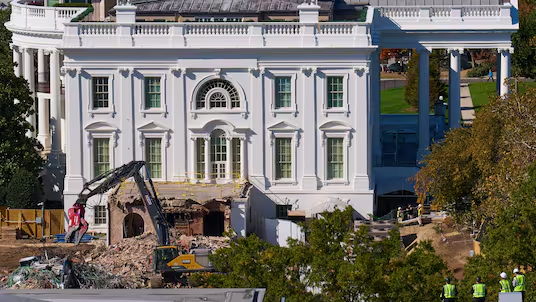
The demolition of the White House East Wing under President Donald Trump has sparked debate across political and public circles. Supporters say the move modernizes the historic building, while critics question the necessity and cost of the project.
Officials from the White House confirmed that the East Wing demolition is part of a broader plan to renovate and upgrade facilities. The modernization efforts aim to improve functionality, accessibility, and safety standards.
“The East Wing has served its purpose for decades, but modernization is necessary,” a senior official said. “This project ensures the building meets current needs while preserving its historic significance.”
Supporters argue that the demolition and reconstruction will provide more efficient workspaces and enhance the overall functionality of the White House complex. They also note that upgrades include improved security and compliance with modern building codes.
Critics, however, have raised concerns about potential costs, disruptions, and the impact on the historic character of the White House. Some question whether a full demolition was required instead of renovation or restoration.
Historical preservation groups have voiced interest in ensuring that key architectural features are protected. They emphasize that while modernization is important, maintaining the building’s heritage remains a priority.
The East Wing houses offices, event spaces, and support staff areas. Renovations are expected to enhance operations and provide a more secure environment for staff and visitors alike.
Construction teams have begun preliminary work, including assessments of structural integrity and planning for safe removal of materials. Officials say safety and environmental considerations are being strictly followed.
Public reactions have been mixed. Many citizens express support for updates that improve efficiency and safety, while others question the timing and expense of the demolition. Analysts note that debates over historic buildings often reflect broader discussions on preservation versus modernization.
The project also highlights the balance between maintaining historic sites and adapting to contemporary needs. White House officials say the effort will include careful documentation and preservation of key elements to honor the building’s legacy.
Demolition and reconstruction projects of this scale are rare in government buildings, making the East Wing project particularly notable. Experts say it represents an opportunity to set standards for modernizing historic facilities while respecting their past.
Trump’s administration has emphasized that the project is a long-term investment. Officials claim the modernization will reduce maintenance costs over time and improve operational efficiency for staff and visitors.
Security improvements are also a central part of the plan. Upgraded systems and safer layouts are expected to enhance protection for both personnel and high-profile guests.
While debate continues, the project has sparked national discussion about how historic buildings should adapt to modern needs. Some see it as a necessary step forward, while others view it as a controversial choice.
Officials have pledged transparency and public updates throughout the demolition and reconstruction process. Community engagement and historical oversight will guide key decisions to balance modernization with preservation.
Construction experts note that similar projects often take years to complete and involve careful planning to prevent disruptions. The White House East Wing project is expected to follow rigorous schedules and standards.
In summary, the demolition of the White House East Wing under Trump represents both opportunity and controversy. Modernization efforts aim to improve function, safety, and security, while raising questions about preservation and cost.

