


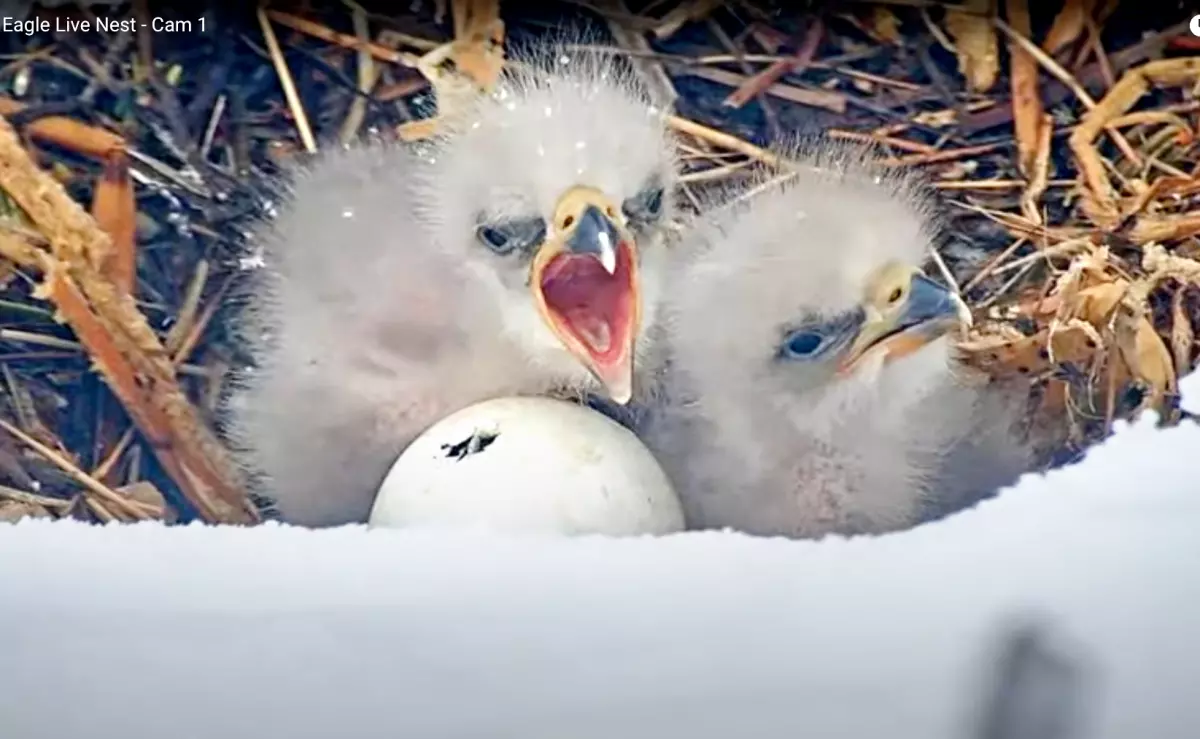
The Minnesota Department of Natural Resources has announced the successful hatching of three eaglets in a monitored nest. The chicks are thriving and receiving close attention from wildlife experts, marking a positive step for bird conservation in the state. The development is being celebrated by conservationists and local communities as a sign of progress in protecting bald eagles and other bird species.
The nest, located in a safe and monitored area, allows biologists to observe the eaglets without disturbing their natural behavior. Wildlife specialists report that the chicks are healthy and developing normally. Close monitoring helps ensure that any potential threats, such as predators or environmental hazards, are identified quickly.
Bald eagles were once at risk due to habitat loss and the use of pesticides, but conservation efforts over the past decades have helped their populations recover. Minnesota is home to numerous bald eagle nesting sites, and the state has seen steady growth in eagle populations thanks to legal protections and habitat restoration programs. The successful hatching of these three eaglets is a continuation of that trend.
The Minnesota Department of Natural Resources emphasizes that public awareness and engagement are critical to conservation success. By monitoring nests and reporting sightings, residents contribute valuable data that helps biologists track population health and nesting patterns. Community support plays an important role in protecting nesting sites from disturbance and ensuring that birds can raise their young safely.
Experts note that early spring hatching is a crucial time for eagles. During this period, adult eagles are busy feeding and protecting their chicks. The survival of eaglets depends on sufficient food supply and the safety of their nest. Close monitoring by wildlife officials ensures that the young birds receive proper care in their natural environment while minimizing human interference.
The Minnesota Department of Natural Resources has encouraged the public to observe from a distance and avoid disturbing nests. Using binoculars or wildlife cameras is recommended for those interested in viewing the eaglets. This approach allows people to enjoy the experience while maintaining the safety and wellbeing of the birds.
Conservationists say that these successful hatchings are more than just a local success story. Bald eagles are an important indicator of environmental health. Their recovery reflects the effectiveness of long-term conservation strategies, including habitat protection, pollution control, and public education. Each successful nesting contributes to maintaining a stable eagle population and strengthens overall biodiversity in Minnesota.
The eaglets are expected to grow quickly over the next several weeks. Wildlife officials will continue to monitor their development, including their ability to fledge and leave the nest. These milestones are closely tracked to ensure that the chicks reach maturity and can eventually contribute to the adult population.
Local communities have expressed excitement about the hatchings. Schools and nature groups are using the event as an educational opportunity to teach children and residents about wildlife conservation. By connecting people with nature, these initiatives help build a culture of respect and care for the environment.
The successful hatching of these three eaglets provides a hopeful message for conservation efforts in Minnesota and beyond. It demonstrates that with careful monitoring, habitat protection, and public engagement, endangered or threatened species can thrive. Wildlife experts hope that stories like this will inspire continued support for environmental initiatives and encourage more people to take an active role in protecting local wildlife.

