


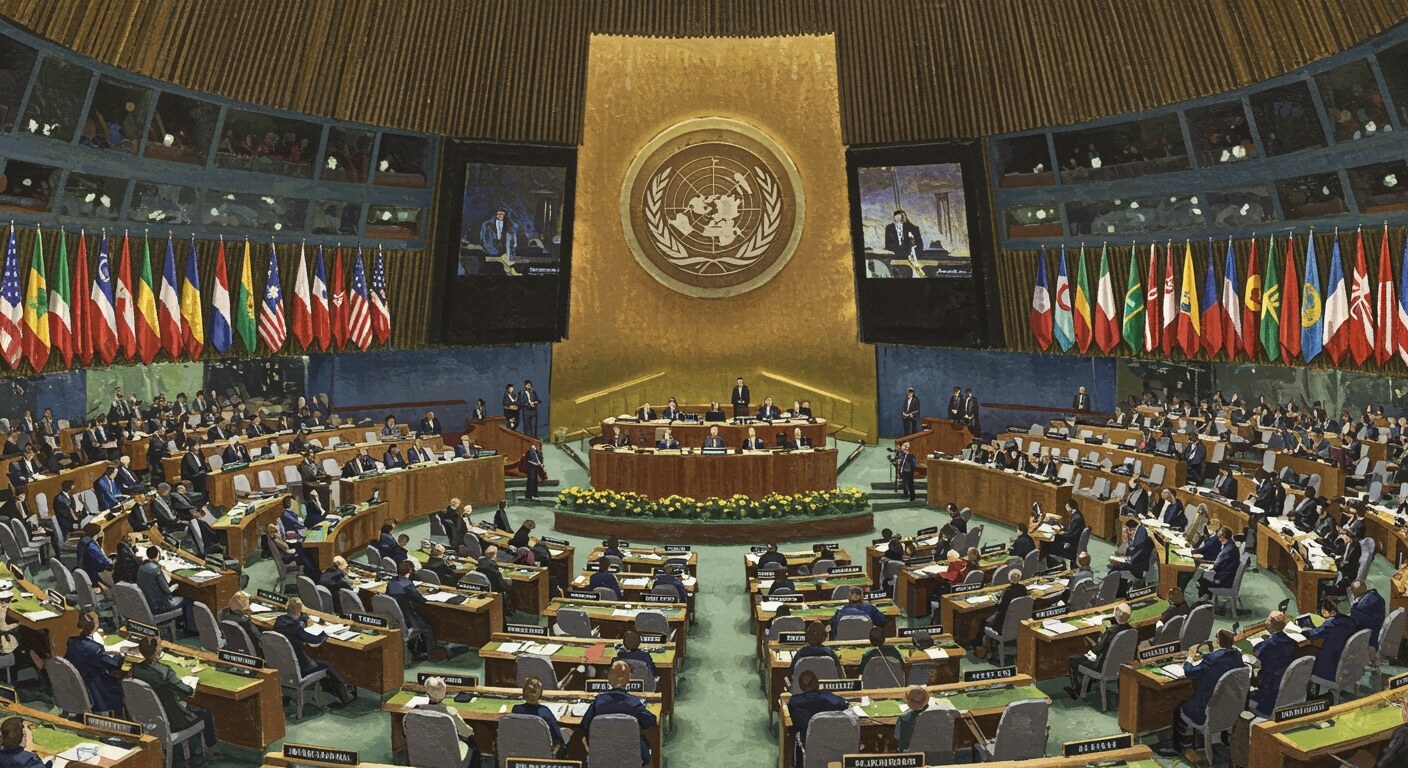
The United Nations has established a 40-member international scientific panel to study the risks and impacts of artificial intelligence (AI), despite strong opposition from the United States. The announcement comes as former employees from AI companies raise alarms over the technology’s rapid development and potential dangers.
UN Secretary-General Antonio Guterres called the move a “foundational step toward global scientific understanding of AI,” emphasizing that the panel will provide independent, rigorous insight to help all member states engage on an equal footing, regardless of technological capacity.
Panel Mission and Structure
The Independent International Scientific Panel on Artificial Intelligence will produce annual reports analyzing AI’s risks, benefits, and societal effects. It is described as the “first global scientific body of its kind.”
The 40 members were chosen from over 2,600 applicants following a review by UN bodies and the International Telecommunications Union. Members will serve three-year terms, with Europe holding 12 seats, including representatives from France, Germany, Italy, Spain, Poland, Belgium, Finland, Austria, Latvia, Turkey, and Russia.
Rising Industry Concerns
Concerns about AI have intensified as employees leave companies over safety and ethical issues. Former Anthropic researcher Mrinank Sharma warned in an open letter that “the world is in peril” due to AI and other global crises. Zoe Hitzig, formerly OpenAI’s top researcher, expressed “deep reservations” about her former employer’s strategy.
Prominent AI figures, including Dario Amodei, Sam Altman, and Steve Wozniak, have also voiced warnings about the potential risks of unchecked AI development.
U.S. Pushback and Global Debate
The United States strongly opposed the panel, with representative Lauren Lovelace calling it “a significant overreach of the UN’s mandate and competence” and asserting that AI governance should not be dictated by the UN.
Despite objections, UN officials insist the panel is intended to provide scientific guidance rather than enforce regulations, helping countries navigate AI development responsibly while fostering international collaboration and safety.

