


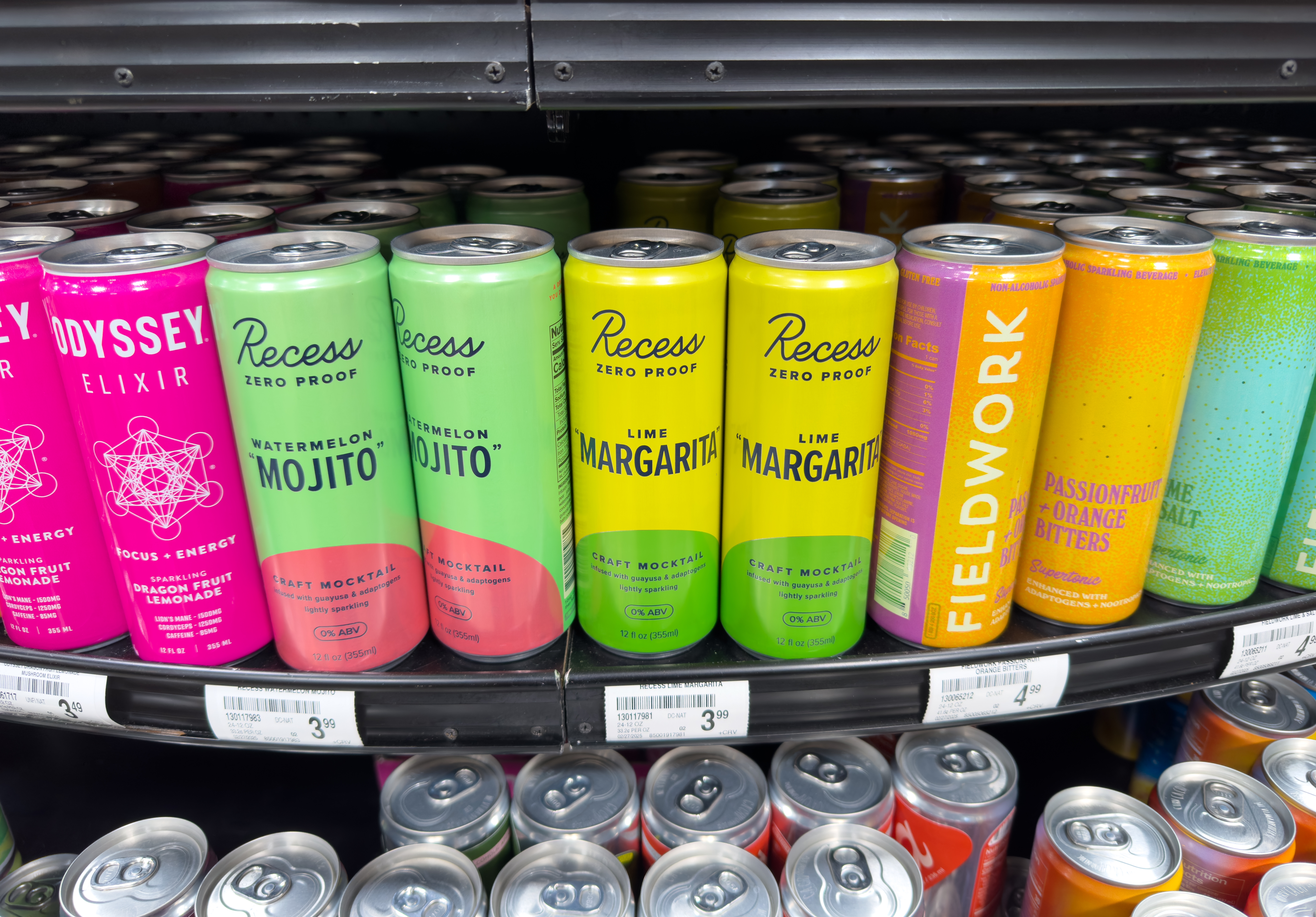
Walk down any supermarket aisle in 2025 and you’ll find colourful cans promising “calm” or “focus.” These functional drinks – often infused with ashwagandha, lion’s mane mushroom, magnesium, or CBD – are marketed as quick fixes for stress, energy, and mental clarity.
The trend has exploded. According to Grand View Research, the global market for functional beverages is set to hit $248.5 billion by 2030. In the UK, a broader shift away from alcohol is fuelling demand: a YouGov survey found that 44% of 18- to 24-year-olds now choose low- or non-alcoholic alternatives.
“These products fit perfectly into today’s wellness culture, where people are seeking convenient solutions,” says Nicolle Cucco, a registered dietitian and certified personal trainer. “In a fast-paced world, the idea of a quick, drinkable fix is very attractive.”
Do they actually work?
Functional drinks aren’t new – coffee and chamomile tea have long served the same purpose. What’s different is the slick branding of companies like TRIP and Huel, which package ingredients such as L-theanine, CBD, and ashwagandha into glossy cans.
Scientific evidence is mixed. Ashwagandha and L-theanine have shown benefits for stress and attention in some studies, but research is limited. Magnesium supplementation may help if you’re deficient, but extra doses don’t make a difference otherwise.
Buzzwords vs. science
That hasn’t stopped bold marketing. In July, the UK’s Advertising Standards Authority banned a TRIP advert that implied its drinks could reduce stress and anxiety – claims that weren’t scientifically proven.
“The placebo effect is powerful here,” says Cucco. “Believing a drink will help you relax can genuinely change how your brain perceives stress. That doesn’t mean the products are useless, but expectation often amplifies their effects.”
Not a medical fix
Influencers on TikTok and YouTube have helped functional drinks go mainstream, presenting them as easy solutions to complex issues. But experts caution against seeing them as substitutes for medical treatment.
“For conditions like ADHD or generalised anxiety disorder, these drinks – placebo or not – are not appropriate treatment,” says Cucco.
Still, when enjoyed alongside a healthy lifestyle, they’re unlikely to cause harm – except perhaps to your wallet, with a 12-pack of TRIP costing up to €27.
“Consumers should pause, look beyond the marketing, and understand what they’re putting into their bodies,” Cucco advises. “Some ingredients may help, others less so. But there’s no quick fix in a can.”

